- Home
- In-House Training
Neurocentric In-House Training for Therapy, Training, and Performance
Neurocentric in-house training delivers sound expertise for more precise diagnostics, better decisions, and more effective therapy and training processes — directly on-site with your own team.
Everyday Practice
Why Many Continuing Education Programs Fall Short in Everyday Practice
Physiotherapeutic work today is professionally demanding and diverse. Yet recurring challenges keep showing up in everyday practice:
- Therapy results are often not lasting
- Complaints return despite correct treatment
- Complex cases take up a disproportionate amount of time
- Performance development stagnates despite consistent effort
These limitations usually don’t stem from a lack of commitment or qualification, but from a one-sided perspective.
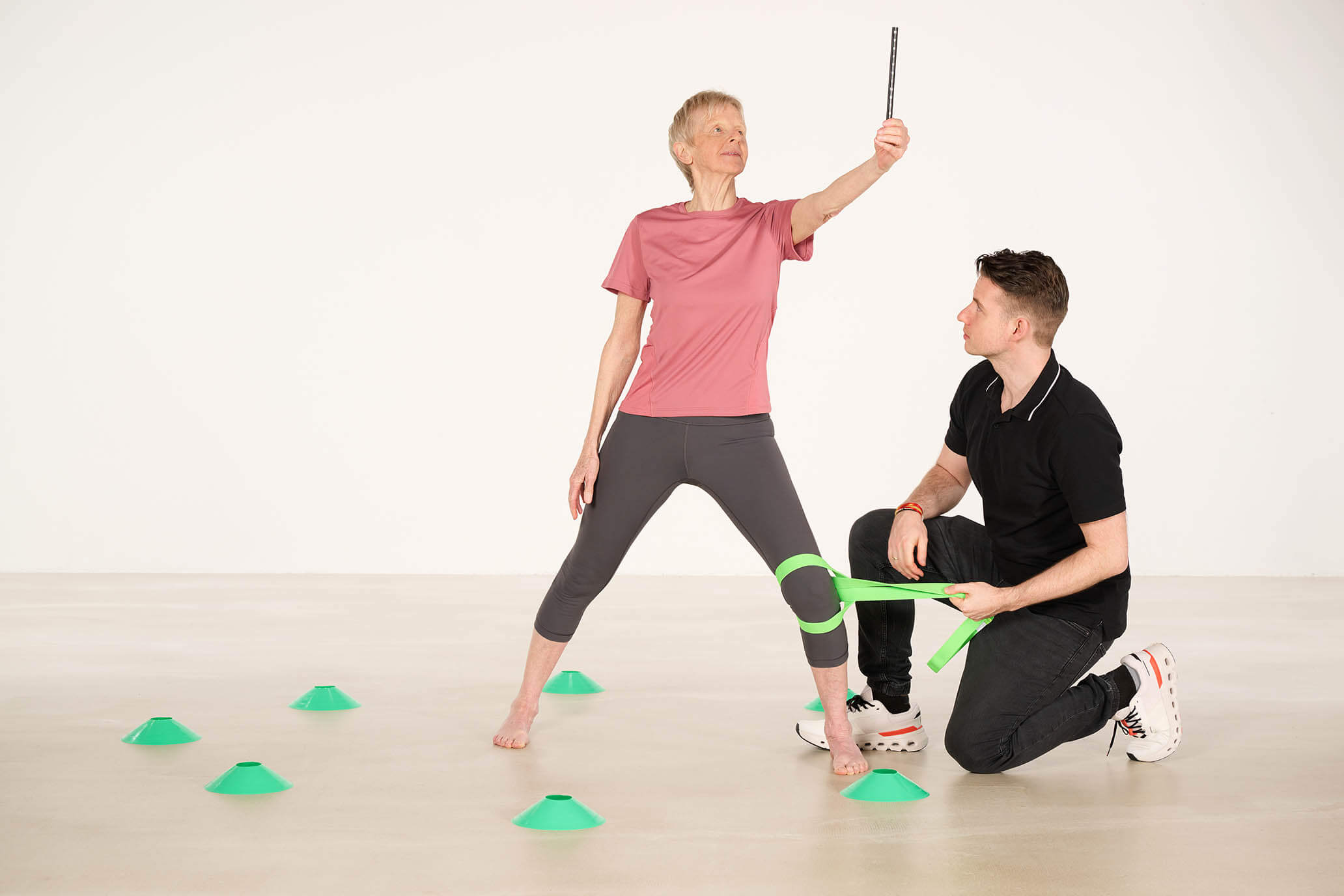
The Often-Overlooked Control Level
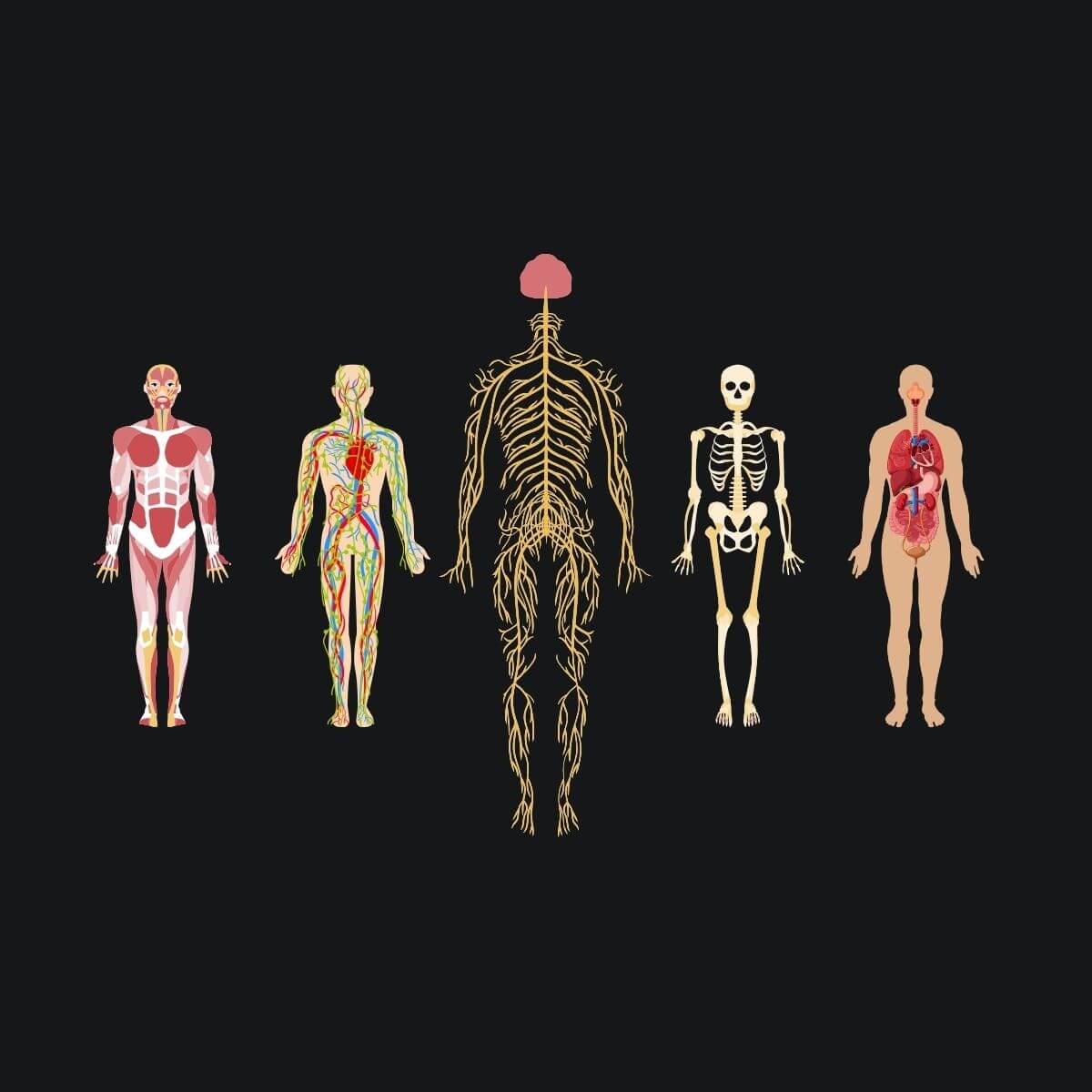
Classical therapy and training concepts focus primarily on structural factors such as muscles, joints, fascia, or the cardiovascular system.
However, movement, stability, pain processing, and performance are largely controlled by the nervous system.
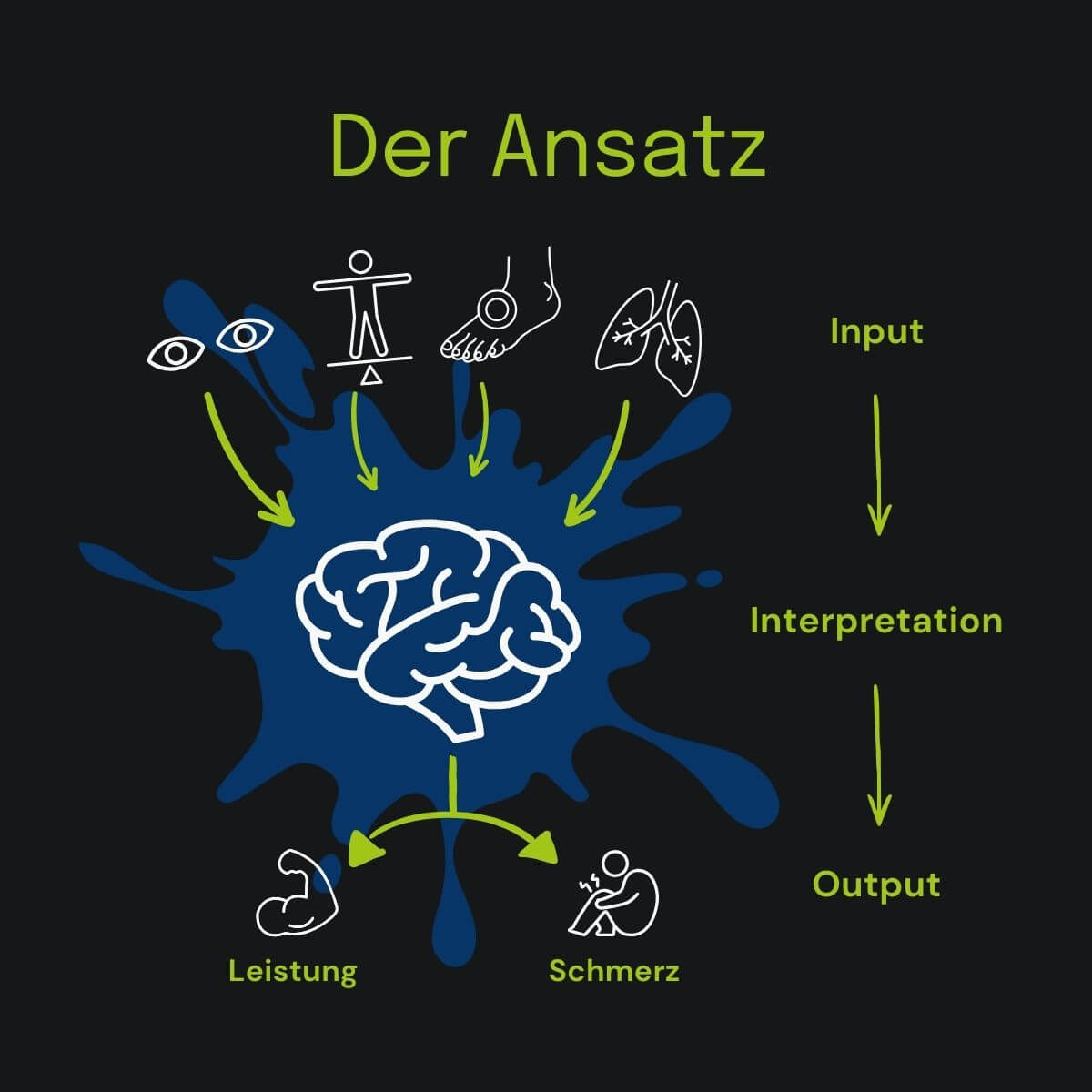
It evaluates sensory information, prioritizes stimuli, and determines which motor solutions are available.
If this level is not taken into account, therapeutic and training-related potential remains untapped — even when the structural work is done correctly.
The Approach Behind Neurocentric In-House Training
Neurocentric in-house training is based on the principles of applied and functional neurology. It expands existing therapeutic and training-science concepts to include the central control level: the nervous system.
At the core is a clearly structured working process: Screening → Interpretation → Intervention
The goal is to make neurological connections understandable and to integrate them purposefully into everyday clinical and athletic practice.
This is not about replacing established methods, but about complementing them with sound expertise and applying them more precisely.
What Changes Through Neurocentric In-House Training
After an in-house training session, it’s not just the choice of exercises that changes — above all, the basis for decision-making in therapeutic and training-related work changes.
Typical effects within the team:
- An expanded functional understanding of movement and pain
- More differentiated screenings beyond purely structural tests
- Greater confidence in assessing complex cases
- Changes that can be verified more quickly, often within early therapy sessions
- A clearer professional positioning for the practice
Many of these effects can be demonstrated immediately, for example through:
- Reflex-based changes in muscle activity
- Changes in strength and stability values depending on eye position
- The influence of visual stimuli on mobility
- Improvements in postural control through vestibular stimuli
These phenomena are not special cases — they are an expression of neurophysiological connections.
In-House Training
Target Audiences
The training programs are suitable for diverse teams — from newcomers to experienced professionals:
Physiotherapy practices and physiotherapy centers
✓
Occupational therapy
✓
Rehabilitation and health centers
✓
Performance centers and Olympic training centers
✓
Associations and professional organizations
✓
Performance-oriented sports organizations
✓
The Introductory Module
Neuro Basic (2 Days)
Neuro Basic forms the foundation for working with applied and functional neurology in therapy and training.
The two-day program covers:
- How the nervous system controls movement, stability, pain, and performance
- How sensory information is processed and prioritized
- How these processes can be specifically influenced
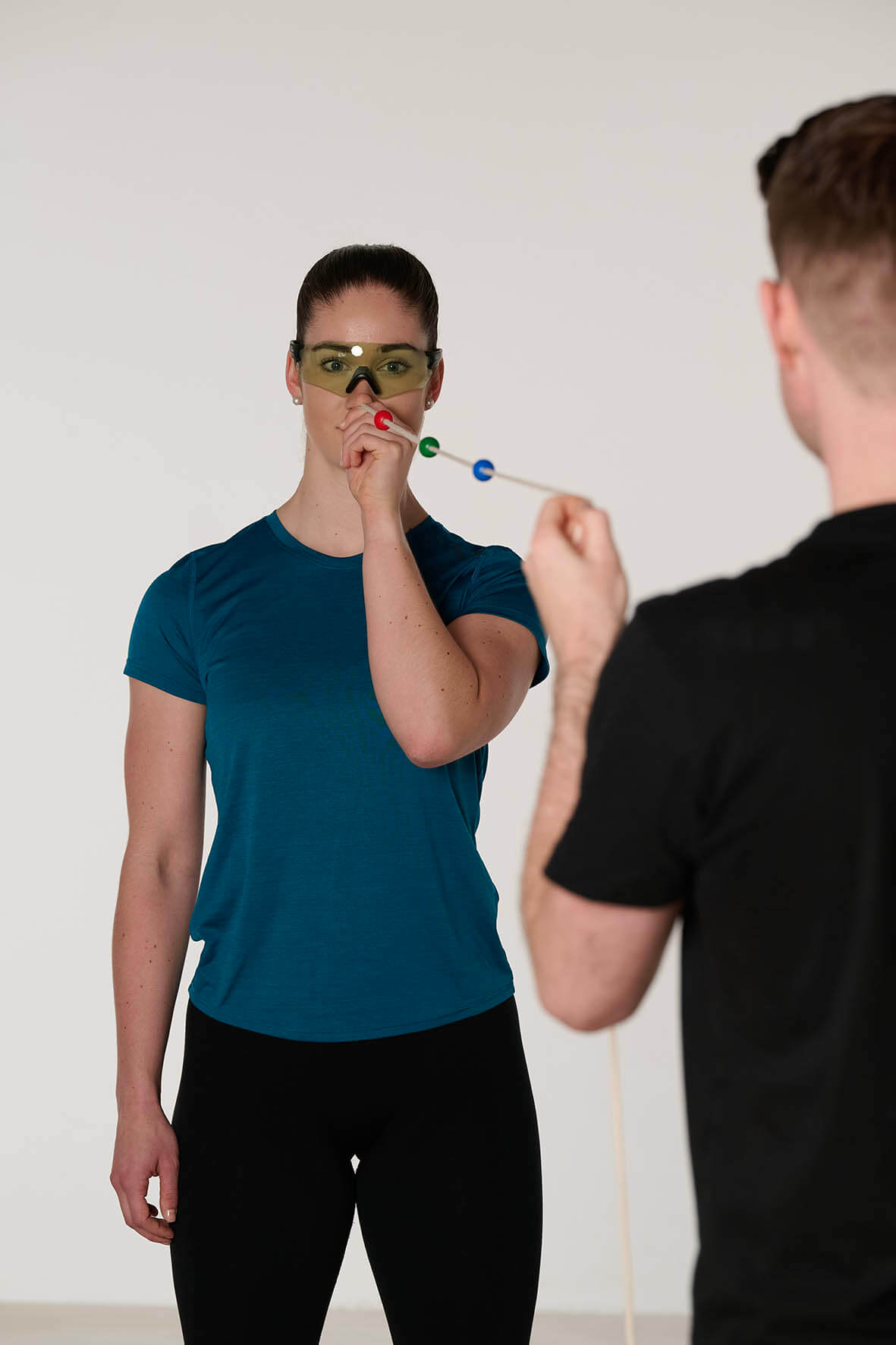
Theoretical foundations and practical application are closely interwoven, so that content is not just understood, but experienced in a directly verifiable way.
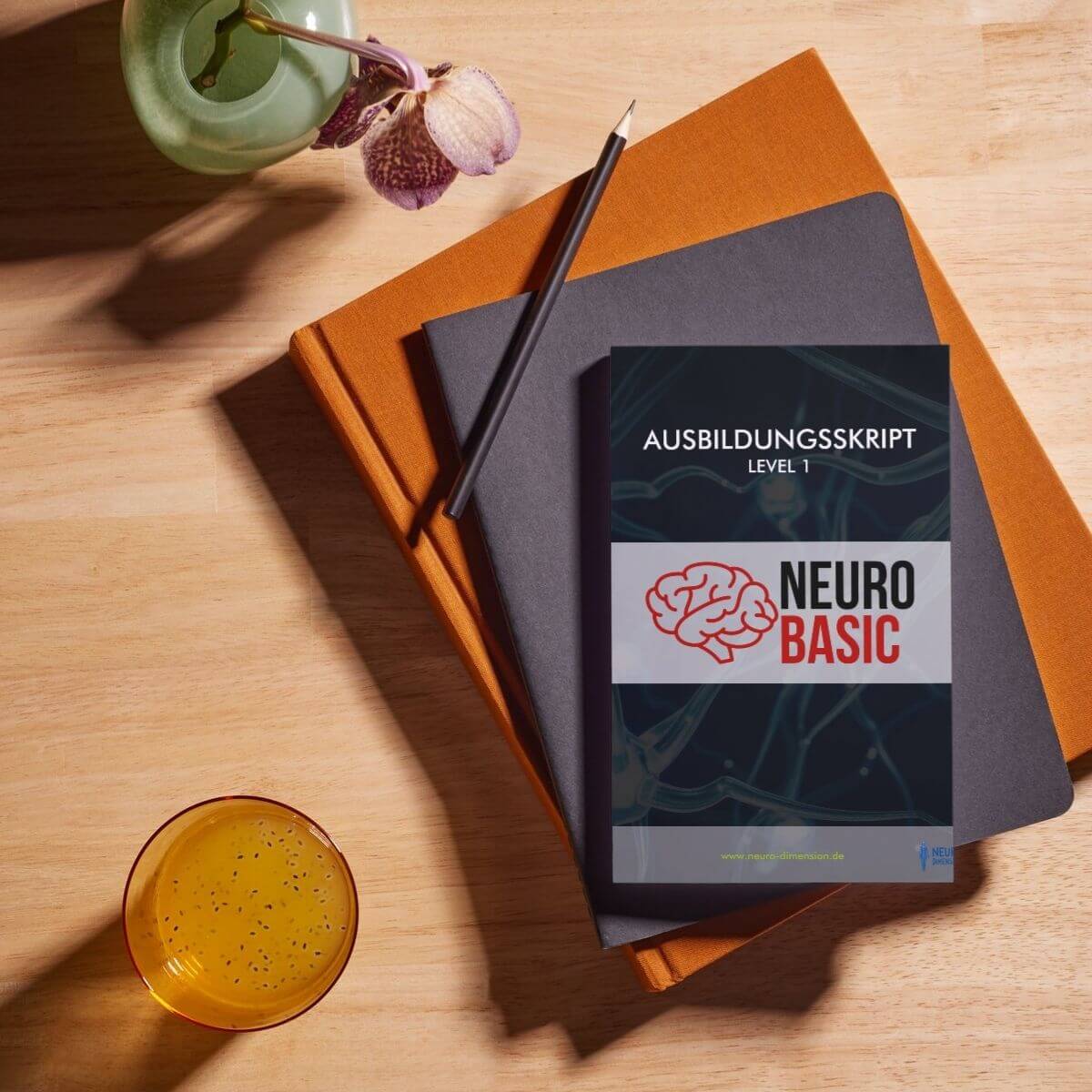
Excerpt
Contents of Neuro Basic
Neuro Basic forms the foundation for working with applied and functional neurology in therapy and training.
The two-day program covers:
- Fundamentals of applied and functional neurology
- Neurocentric performance control
- The input–interpretation–output model
- Function and interaction of key brain regions
- Screening and interpretation of the visual, vestibular, and proprioceptive systems
- Practical interventions with immediate effect
- Application in therapy, training, and performance-oriented settings
This module creates a shared professional foundation within the team and serves as the basis for further content.
Advanced and In-Depth Modules
Building on Neuro Basic, the content is deepened and expanded in more differentiated ways through advanced modules.
The focus is on the interaction of sensory systems and their influence on motor control, autonomic regulation, and performance.
Possible Areas of Specialization
- Advanced visual, vestibular, and proprioceptive strategies
- Integration of additional sensory systems such as smell and taste
- Breathing patterns and respiratory control
- Vagus nerve function and the autonomic nervous system
- Cranial nerves and their significance for movement, posture, and behavior
- Application for chronic complaints, complex cases, and performance topics
Individual Customization
All advanced modules are tailored to the respective framework conditions, including:
- Team size and qualification level
- Patient or athlete structure
- Organizational circumstances
- The practice's professional goals
Benefits of In-House Training for Practices
- Consistent level of knowledge across the entire team
- Direct relevance to your own everyday work
- No loss of knowledge transfer, unlike external training programs
- Lasting change in therapeutic decision-making processes
- Cost-effective alternative to individual continuing education courses
- Strengthens the practice's professional positioning
Conditions
Organizational Framework
- Recommended group size: 15–25 people
- Larger groups: by arrangement
- Language: German, English on request
- Materials: Presentations, script, training and exercise materials
- Certificate: optional
- Duration: 2-day introduction, further modules flexible
- Price: individual inquiry
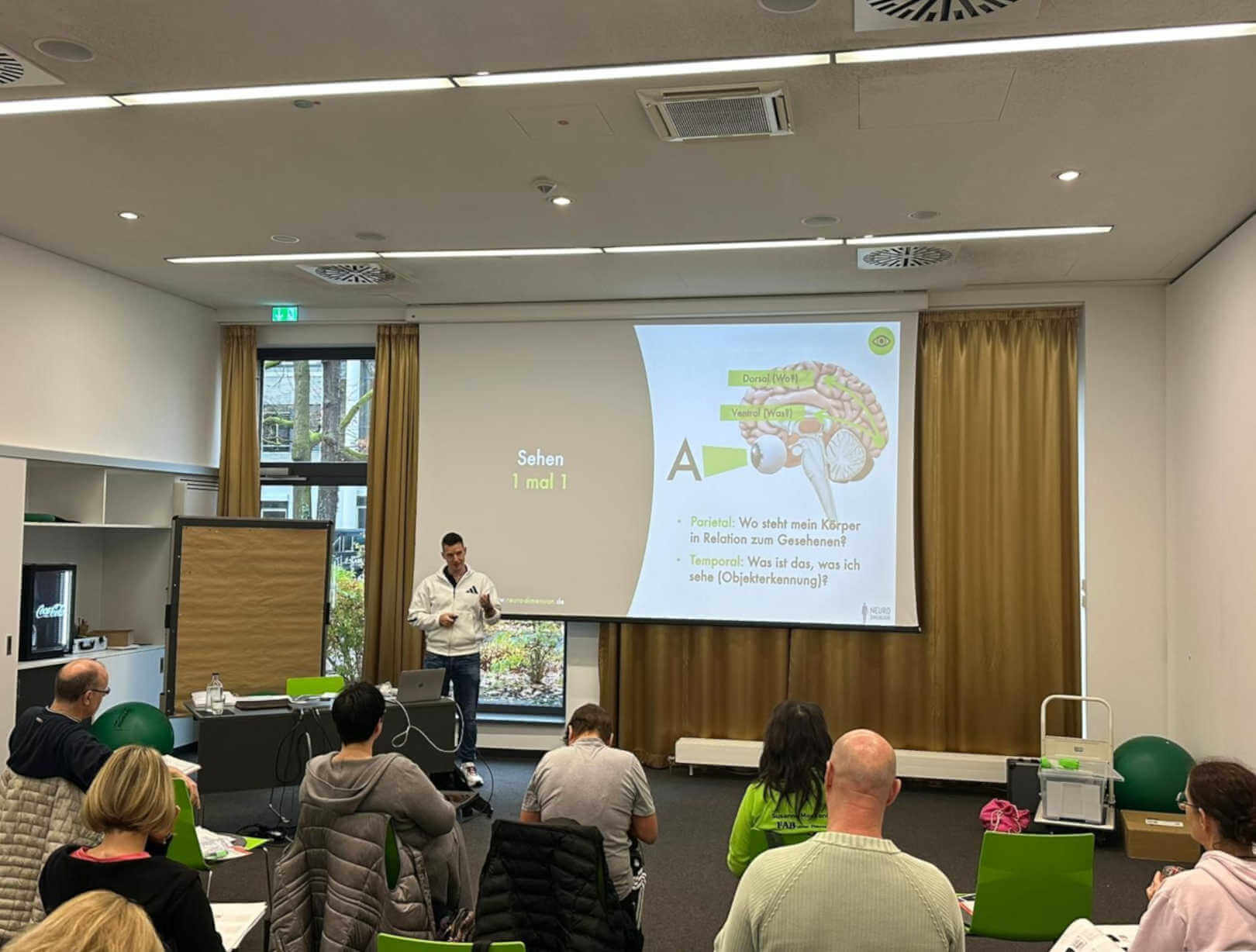
Professional Background of
Kevin Grafen
- Over 1,000 therapists and trainers trained
- Many years of experience as a coach/trainer
- Focus on applied neurology and neuroathletics since 2016
- International training and continuing education
- Degree in sports science
- Speaker, instructor, and author
- Collaboration with practices, associations, and performance centers

Feedback
Reviews & Testimonials
The in-house seminar on neurocentric training with Kevin was a true highlight for our entire team. It gave us many practical tools we could apply right away. Especially valuable was how quickly it could be applied to complex conditions […] with noticeable success for our patients. A clear recommendation for any physiotherapy practice.
Physiohaus Rinke
Mario and Sabine Rinke
The in-house training with Kevin was very hands-on and explained the theory extremely well. Kevin manages to make complex neurophysiological connections so tangible that you can apply them directly and successfully as a therapist with patients. An absolute recommendation for any practice looking to further develop its quality of treatment.
medbalance
Monika
Request In-House Training
No Obligation.
Tailored to You.
Professionally Grounded.
Would you like to purposefully develop the therapeutic and training-related work at your practice and integrate neurocentric approaches with a solid foundation?
Questions & Answers
Frequently Asked Questions
An in-house training session makes it possible to tailor the content precisely to the requirements, target groups, and framework conditions of a specific practice. Instead of a standardized training format, the focus is on the team's actual questions, typical clinical patterns, and existing workflows. This creates strong practical relevance, and the content can be integrated directly into diagnostics, therapy, or training.
At the same time, learning together fosters a shared professional understanding within the team, which makes communication, decision-making, and treatment strategies noticeably clearer and more consistent. The format is also efficient from an organizational standpoint, since several staff members can be trained in parallel without additional travel time or days off.
The result is continuing education that not only conveys knowledge but has a lasting impact on day-to-day work.
At the start, goals, content, and organizational framework conditions are agreed upon together, so the training is precisely tailored to the team and its specific requirements. Based on this, the training typically takes place over two days directly on-site at the practice.
The content is structured as a combination of theoretical foundations and practical application, with the aim of making connections understandable while also developing concrete strategies for everyday work. This ensures that all participants can work at a shared professional level.
Course materials are provided digitally in advance, so the time spent together on-site can be used as effectively as possible.
In-house training is aimed at professionals who work with people and want to specifically improve their health, performance, or resilience. Since training and therapy always work through the nervous system, a neurocentric view of movement and function is central.
The content is especially geared toward everyday clinical and training-science practice and is suitable for physiotherapy, training, coaching, and medical fields. It can be integrated directly into diagnostics, therapy, and training, and meaningfully complements existing concepts.
The format is particularly well suited for teams who want to develop a shared professional understanding and advance their practical work in a structured way.
The training expands professional understanding of how performance, pain, and resilience should be classified from a neurophysiological perspective. This allows complaints to be analyzed in a more differentiated way and interventions to be planned more precisely.
At the same time, it creates greater confidence in decision-making, since diagnostics and training control are based on clear principles. This often leads to more efficient processes and a more coherent line of reasoning toward patients, clients, or colleagues.
In addition, the extra qualification strengthens one's own professional positioning in the market, particularly in the field of therapy and training concepts.