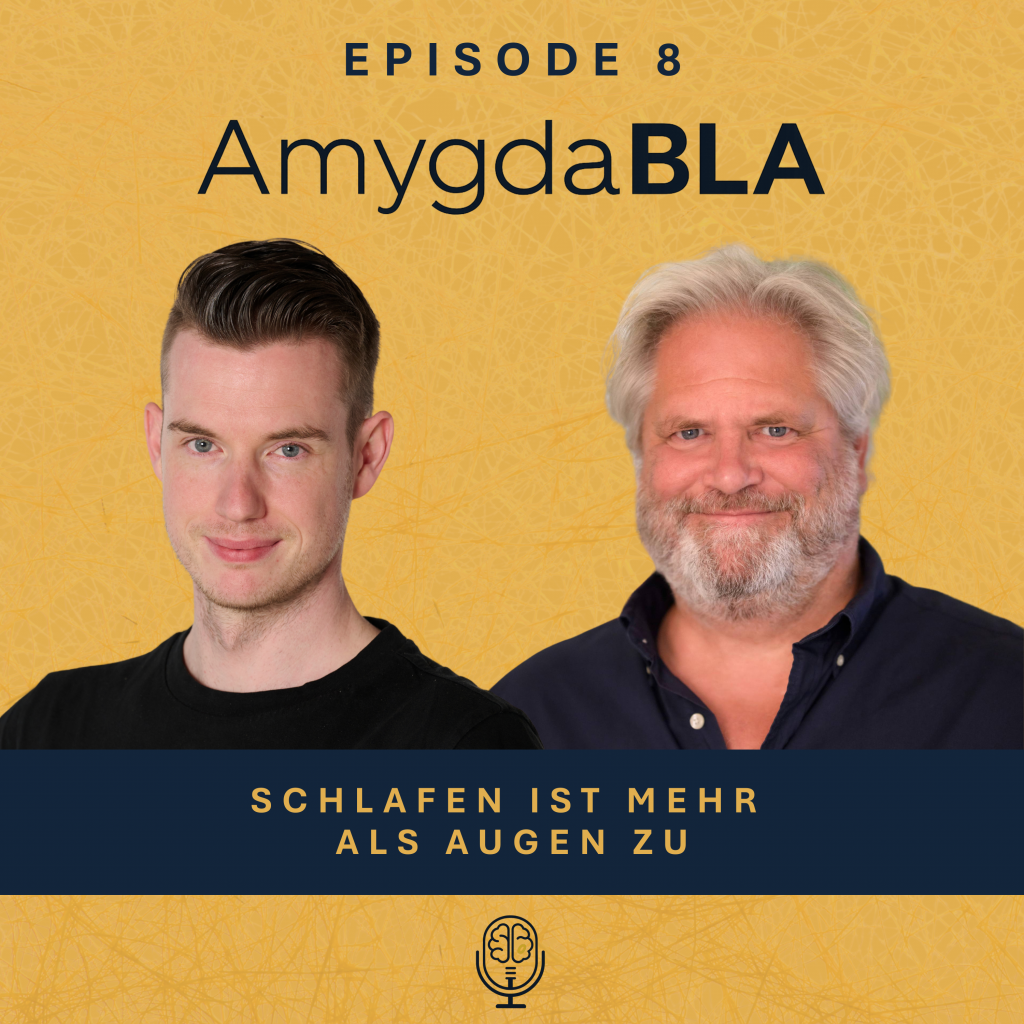
Sleep is something every human does – and something a surprising number of people don’t actually do well. Yet healthy sleep is far more than “lights out, eyes closed”: it’s a highly complex state in which the brain, hormones, regeneration, metabolism, the immune system and performance all interlock. Dr. med. Michael Feld – a specialist in general medicine, somnologist and one of the best-known sleep experts in the German-speaking world – has spent around 25 years at his practice in Frechen-Königsdorf working on sleep disorders, sleep apnoea, snoring, regeneration and prevention. Despite decades of research, sleep remains a black box to him.
“I’ve been working on this for a good 25 years now – and even so, we’ve perhaps understood half of it. The other half still awaits research.” — Dr. med. Michael Feld
What happens in the brain when we sleep
The organ that needs sleep most urgently is the brain. A muscle could get by half-decently on mere rest in a pinch – the brain cannot. It is our most metabolically active organ, with an enormous throughput, and, just like the immune system, a learning system.
“The main organ that needs sleep is the brain.” — Dr. med. Michael Feld
Sleeping means the sensory organs go offline for a few hours. Closing your eyes isn’t enough – you’re still awake. During sleep, the “blinds” at the sensory organs are lowered from within so that input to the brain stops. Otherwise the working memory gets overloaded: through the eyes alone, unimaginable amounts of data pour into the brain every day. Sleep works like saving a file on a computer – it sorts and processes what came in during the day through eyes, ears, nose and skin, according to the simple question: what do I need, what don’t I?
The architecture of the night
This process doesn’t run uniformly. In four to five cycles per night, sleep passes through different depths – in waves, repeated several times. Usually, shortly after falling asleep, you drop fairly quickly into a first deep-sleep phase. “Deep” means the brain waves become ever slower and higher in amplitude. While you’re awake and talking, the brain is active at high frequency; in deep sleep, by contrast, many groups of neurons synchronise and oscillate together – a phenomenon found almost only in sleep.
Technically, three non-REM phases are distinguished – N1 (very light sleep), N2 (medium-deep, normal sleep) and N3 (deep sleep) – plus, as a special phase, REM sleep, the dream sleep, in which a completely different programme runs. REM stands for Rapid Eye Movement: the eyes twitch and roll back and forth. With electrodes placed beside the eyes, these movements can be recorded – if they appear while muscle tension is simultaneously lowered, the person was probably dreaming in that phase.
Why the eyes twitch so much during REM sleep is still not clearly understood. One hypothesis holds that the gaze follows the dream images – though that isn’t entirely convincing, since the speed and nature of these saccades don’t quite fit. Another idea links the eye-muscle activity to heat dissipation from the brain. So far, none of the theories has been clearly proven.
Why we sleep at all
From an evolutionary standpoint, sleep is a paradox. For millennia, sleeping was highly dangerous: unconscious and defenceless while predators prowled. And yet nature conserved this long, risky phase – seven, eight of 24 hours – throughout the whole of evolution. So it must have a deep biological purpose. And indeed: nearly every living creature we know of shows something we call sleep.
How indispensable it is becomes clear at the extremes. The documented record for staying awake is around 71 hours – a healthy young man under controlled conditions. He developed hallucinations (REM sleep then intrudes into waking life, and you see dream images even though you’re awake), grew weak, and afterwards, in the “rebound”, first caught up above all on deep sleep. In rats, by contrast, total sleep deprivation in the lab is fatal: they die within two to three days of sepsis, because their immune cells can no longer make it from the bloodstream into the target tissue. The immune system collapses.
Because the immune system, too, learns during sleep. On the skin and mucous membranes sit billions of microbes, and the body must constantly decide: friend or foe? Form antibodies or not? This assessment takes place during sleep. And the brain? Around half of the synaptic remodelling in REM sleep serves not to build up connections but to break them down. For a long time the belief was: the more synapses, the better. That’s not true – a synaptic overload is counterproductive; what matters is the efficiency of the connections, not their sheer number.
“At night a kind of inspection crew walks through and checks: we’ll keep the flower for tomorrow. We’ll still eat the burger. This one we throw away.” — Dr. med. Michael Feld
Sleep is thus both regeneration and a tidying-up process.
How much sleep does a person need?
Studies worldwide, including among indigenous peoples, paint a clear picture: about 70 to 80 percent of people need seven to eight hours on average to stay healthy and capable over the long term. Only around 10 percent are genuine genetic short sleepers who get by permanently on four to six hours – among them, strikingly many top managers and politicians who pour the time they gain into work. At the other end of the curve stand a further roughly 10 percent of long sleepers with a need for nine to ten hours, who have a hard time in a society that starts at eight o’clock.
Anything under seven hours is, on average, already too little. In Germany the average is about six hours – many catch up at the weekend. Ask people how long they would sleep free of all obligations, and you arrive at a little over eight hours.
Can you catch up on sleep?
Within limits, yes. During the week most people accumulate a sleep deficit. At the weekend part of it can be recouped, which many do intuitively. For some, a fixed rhythm at the weekend too is better; most, however, benefit from sleeping in without the pressure of an alarm. The limit is clear, though: anyone who sleeps two hours too little every day won’t make that up at the weekend.
Power naps help too – as a question of dose and moderation. Around midday, usually between 1 and 3 p.m., there’s a biological low in which blood sugar and core body temperature drop. A nap of 15 to 20 minutes can be very refreshing; you don’t even have to really sleep – dozing in the alpha stage is enough. What matters is the roughly horizontal position with the feet raised, so that the postural muscles and the energy-hungry cortex can relax. Two missing hours of sleep, however, cannot be replaced by 15 minutes of dozing.
Sleep across the lifespan
Across the entire lifespan, the need for sleep declines continuously. A newborn sleeps around 16 hours – two-thirds of the day – and still without a fixed rhythm. A nine-year-old needs 10 to 11 hours, someone in their mid-fifties perhaps seven to eight, older people often less.
The REM share changes especially markedly: in the newborn, dream sleep still makes up about 50 percent of total sleep time, in the adult only 15 to 20 percent. The reason is that for the child’s brain everything is new and has to be wired up – an experienced brain, by contrast, is no longer easily thrown.
The more frequent nocturnal waking of older people can also be read in evolutionary terms: back when people still lay together around the fire, the elders took the night watches while the fit young were spared for the hunt. Much of what is experienced today as a disorder might simply be an evolutionary remnant.
Women sleep differently
As in many areas of medicine, it was long assumed that women’s sleep works just like men’s. It’s similar – but not identical. Women are more sensitive to noise at night: at 40 decibels, the threshold above which noise disturbs sleep, more women wake than men. This is explained by the role of the mother, who checks on the crying child in case of doubt. But it isn’t only genetics; it’s also social conditioning: among fathers who take over childcare entirely, nocturnal waking likewise piles up.
The biggest difference lies in the menopause. When the two main female sex hormones – oestrogens and gestagens – fall during menopause, this often has clear consequences for sleep, because these hormones have a calming effect. Progesterone, for instance, calms the autonomic nervous system via the parasympathetic nervous system and also influences throat tension. That’s why women snore markedly less often than men up until the menopause – afterwards they catch up.
Here lies an underestimated problem. A man who snores heavily is usually noticed by his partner and sent to the doctor. Women, by contrast, make less noise on average even after the menopause, and the less noise-sensitive partner often doesn’t notice. So many women who wake frequently at night and are tired during the day go undetected – even though a mild form of nocturnal breathing disturbance may be behind it, a so-called Upper Airway Resistance Syndrome. Sleep problems around the menopause are simply not always purely hormonal or psychological. That’s exactly why women’s sleep is increasingly coming into focus.
How do you recognise poor sleep?
“I sleep well, I lie down and I’m gone” – on its own that says little. Two patterns are more revealing. First, how long it takes to fall asleep: anyone who regularly needs an hour often still has a nervous system that’s too tense. Second, and more common, staying asleep: people who fall asleep well but then wake once or several times during the night and feel wrecked the next day.
The combination of nocturnal waking and pronounced daytime tiredness points with high probability to a physical cause. A nerve-related sleep disorder, by contrast, typically shows itself in an inability to wind down at all – those affected are thin-skinned, irritable and exhausted, but not really tired, and often couldn’t sleep during the day. Someone with a physical cause such as a breathing disorder, on the other hand, really is tired during the day.
As a rule of thumb: as long as the problems only occur occasionally, resolve on their own and cause little distress, there’s usually nothing to be done yet. But as soon as it lasts longer, becomes loud, or you’re permanently wrecked despite seven to eight hours, you should have it checked out. The dangerous tendency is to put sleep problems too quickly onto the psychological track.
“There are many psychological sleep disorders that belong in cognitive behavioural therapy. But that’s at most half of them. For the other half it comes down to something as mundane as the throat slackening with age.” — Dr. med. Michael Feld
Anyone who spends years on the psychotherapy track without anyone ever having looked for such physical causes is not being helped.
How an assessment works
Compared with other complaints, sleep has one disadvantage: it takes place at night and at home, while medical practices are open during the day – and sleep labs are scarce. That’s why mobile measurement has become established: professional devices, some with brain-wave measurement, that you fit yourself in your own bed; the assessment is now also possible nationwide via video consultation. Private insurers pay for such examinations, statutory ones not always – but smaller measurements specifically for snoring and apnoea (without brain waves) are also covered by statutory insurance when they take place at home. Rule of thumb: anyone who has a sleep disorder for longer than three months at a stretch should have it checked once.
Sleep hygiene: dark, quiet, cool
A third of people don’t sleep well – for them, and basically for everyone, three basics apply.
“The bedroom should be dark, quiet and cool.” — Dr. med. Michael Feld
Dark. Bright light, especially the high-energy blue-wavelength portion, disrupts melatonin production. So the bedroom should be genuinely darkened.
Quiet. Above about 40 decibels, sleep is disturbed. In a measurement for a WDR documentary at the busy Brüsseler Platz in Cologne, a wired-up test person got arousals in real time above this threshold and twitched; when the level dropped below it, they slept on. Whether it’s a snoring partner, a snoring dog or street noise – in summer, in the city, you often only have the choice between the frying pan and the fire: windows shut and too warm, or windows open and too loud.
Cool. Falling asleep and staying asleep only work if the body’s core can cool down by half a degree to one and a half degrees towards the middle of the night – this drop is one of the strongest triggers for falling asleep. In a room that’s too warm, heat builds up, the body overheats, and sleep fails to come.
On top of that: plan in enough hours – and, hardest for many, do nothing strenuous for about an hour before going to bed. No agitating film, no argument, no heavy meal. The “machine” needs time to power down.
Falling asleep better
Anyone who falls asleep poorly can start at various levers. Cognitive approaches channel the spinning carousel of thoughts: fantasy journeys, counting sheep, for some praying the rosary. The trick lies in focus plus monotonous repetition. Body-oriented approaches such as progressive muscle relaxation according to Jacobson take the opposite route: tense muscle groups one after another, let go, and concentrate on the relaxed feeling. And because breathing is closely linked to the autonomic nervous system, targeted breathing techniques help some people. What’s decisive is that everyone finds their own way to power down the nervous system.
And what about lavender and similar scents? Some have a demonstrably calming effect, and lavender is among them. But smells are highly subjective. The sense of smell is the most archaic sense – the only one routed directly into the emotional brain, without the detour via the evaluating authority of the cerebrum. Anyone who finds a scent unpleasant will experience it as counterproductive, no matter what science says. So it’s choice rather than dogma.
Waking up better
How easily waking comes is strongly a matter of type, genetics and nature. Some are instantly present, others truly groggy and need almost an hour before the brain has switched from sleep to wake mode – that’s not an illness but a normal variant. This phase can be shortened with exactly what you want to avoid in the evening: plenty of bright, blue-wavelength light, ideally outdoors, right after getting up. It turns down melatonin and turns the brain to awake.
Coffee works because the caffeine displaces the fatigue substance adenosine from its receptor. Adenosine is the “A” from ATP, our cellular fuel: when we use energy, ATP is split, adenosine rises and makes us tired – until caffeine displaces it (until it later returns). Also helpful: move quickly, get the circulation going, switch on the wake hormones, take a cold shower.
When sleep takes strange paths
A disorder not yet fully understood is sleepwalking. It always arises from the deep sleep of the first half of the night, and there is almost always amnesia for it. Mostly these are short episodes – you sit up in bed, fumble about and lie back down. In some cases complete, automated behaviour runs its course, right up to cooking. The main danger is injury. There’s an age peak around 10 to 12 years; mostly it grows out. Stress intensifies it – and so does a full moon, though that’s mainly down to the bright light, which sets the trigger.
In the same group belongs the night terror (Pavor nocturnus): the child suddenly screams, as if being spitted, and can’t remember anything afterwards – it wasn’t a nightmare. Both count among the parasomnias, harmless wiring glitches in the brain that, as a rule, grow out. If it becomes too severe, it can be reined in with medication.
How good are sleep trackers?
Smartwatches, rings and the like are popular – but caution is called for with sleep measurement. No consumer tracker currently available comes even close to the accuracy of professional devices with brain-wave measurement. Such professional systems cost over 10,000 euros, and interpreting the sleep stages is so complex that in the lab it’s still largely done by hand – even AI can’t yet do it truly reliably.
A tracker that claims to measure exactly “20 percent deep sleep, 20 percent dream, 20 percent light sleep” is therefore not to be trusted – the measurement technology simply doesn’t allow it. What the devices do capture well is the approximate total sleep duration as well as genuine medical values such as oxygen saturation, heart rate and heart-rate variability. Sleep depth, though, none of them can.
“What the trackers do well is roughly gauge total sleep duration, plus oxygen saturation or heart rate. But none of them can measure sleep depth.” — Dr. med. Michael Feld
This holds a trap: anyone who relies on an inaccurate “sleep score” is orienting themselves by false data – you wake up wrecked, and the device reports 100. As long as you have a halfway reliable feel for your own sleep, subjective perception is often the better guide. In a few years the trackers will likely do far more – just not yet.
Conclusion: sleep, too, is allowed to be only human
Three messages remain.
First: take breathing pauses seriously. Persistent daytime tiredness and observed breathing pauses are warning signs of a genuine illness that was long dismissed as a trivial matter. One clue can be a blood pressure that doesn’t drop at night: normally blood pressure and pulse fall by 10 to 20 at night; if the pressure stays permanently high, the likelihood of sleep apnoea rises.
Second: don’t drive yourself crazy. Not every nocturnal waking is an illness, not every passing sleep disturbance a cause for worry. Anyone who fixates on it too much often makes it worse.
“Really, sleep wants to be left alone. It should simply come. And if it absolutely refuses to, we have to help it along – but sleep, too, is only human.” — Dr. med. Michael Feld
Third: destigmatise sleeping pills. Medications carry a bad image – unfair to the 10 to 20 percent who can’t manage any other way without support. Many of those affected are afraid three times over: of the next night, of the consequences of the sleep disorder, and of the help that exists.
“Some people need sleeping pills – and that’s exactly who they’re there for.” — Dr. med. Michael Feld
Dr. Feld’s new book “Frauen schlafen anders” (“Women Sleep Differently”), focusing on women’s sleep, is due out in mid-November. He has also written general sleep guides.